
Visiting Humla - Working Against Trafficking
October 1, 2019

A few months ago, a shelter home in Kathmandu was closed after the 132 children were found to be malnourished and mistreated. Asha was called on to see if they could help take any children. We had space for two girls. However, when two of our team went to the shelter, they were so overwhelmed by the plight of the children, that they brought 7 girls back to Asha for emergency care.
These girls, along with the majority of the children in the closed-shelter, were from Humla, one of the most remote, rural and poverty-stricken regions in Nepal, adjacent to Tibet.
Over the following weeks and months, we contacted their families and 7 of the children were able to be returned to their families: Three girls were reintegrated with their families in Humla and one in Surkhet, one in Kathamndu with her parents staying and working in Kathmandu, and a girl from Dhading is still with us. We have been trying to meet her relatives in Kathmandu and figure out the best possible ways to reintegrate her back into her community.
This past week, two of the Asha team, Kusum Pujari and Indiri Gyawali, along with Dr Andrea Ubhi, chair of Asha Nepal (UK), went to Humla to visit these children to do follow up visits, to check on their welfare.

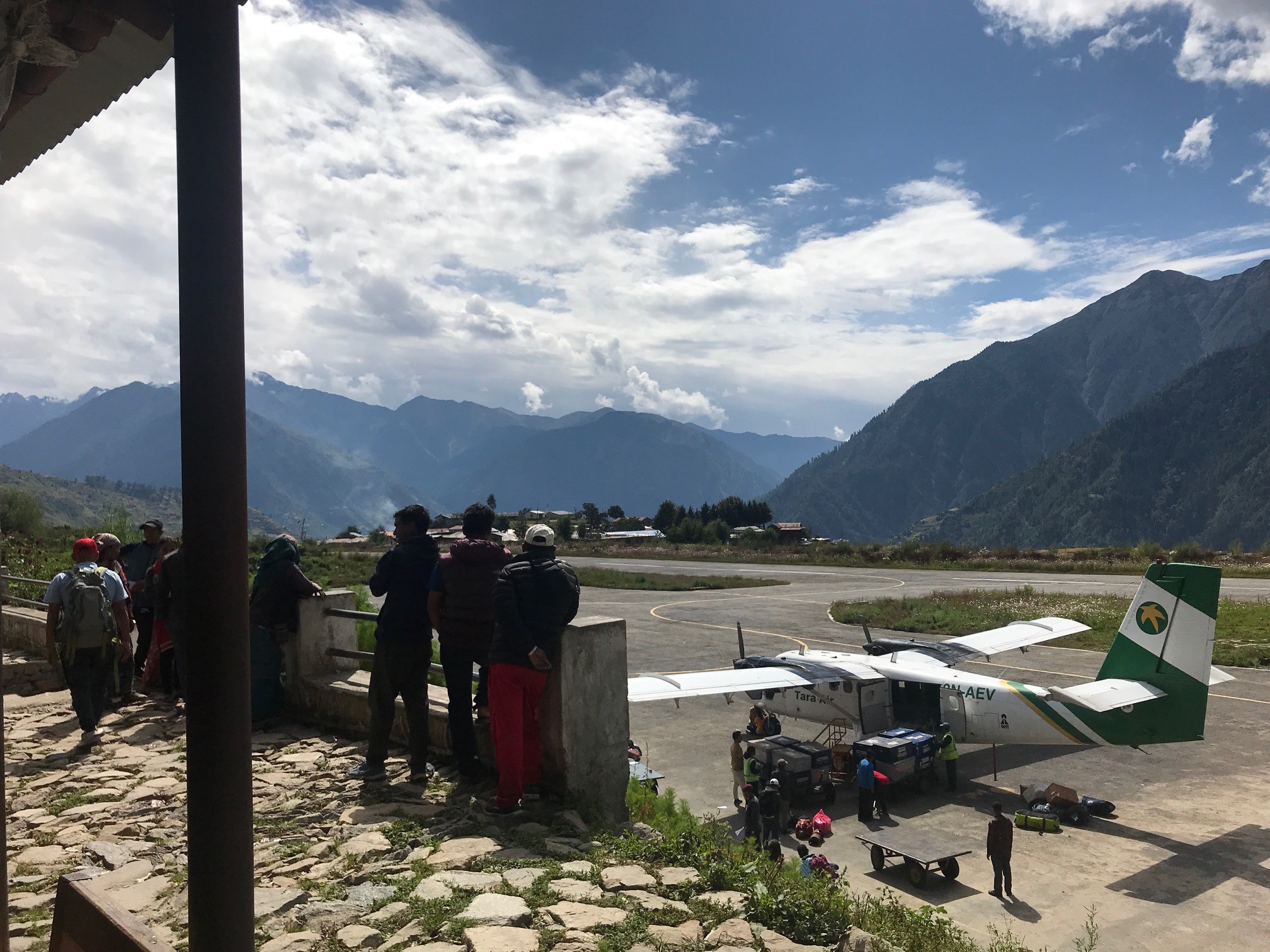
To get to Humla, it takes two plane rides: first to Nepalgunj, then a small plane from there to Simikot, the main town of the Humla region.
Simikot is set on a mountainside, with mountains all around it. There are no roads from Nepal coming into it, and there is one poorly constructed road which comes from China. The people who live in the mountains around Simikot must walk into the town, carrying their loads or use mules to carry produce. Their villages can be many days walk/run away.
We met with each girl in Humla, with their family and relatives. We were amazed to see difficulties in their day to day living. They had such long journeys by food to access their basic necessities. However, we found parents were willing to send their children to better schools and support their children’s education in every possible way. Their hope was that qualitative education will at least bring changes in their children’s lives which will be fruitful for them in old age as well.
We had meetings with as many local organisations, government, and the police, to try to understand the issues, so we could support the girls better that we had helped reintegrate. Also, we wanted to learn if there is any appropriate support that Asha could provide to help Humla. In particular, we were inspired by the work that The Innovative Society is doing with their social workers, and the work of local women activists, Ganga Bohara and Dalsara Pariyar.
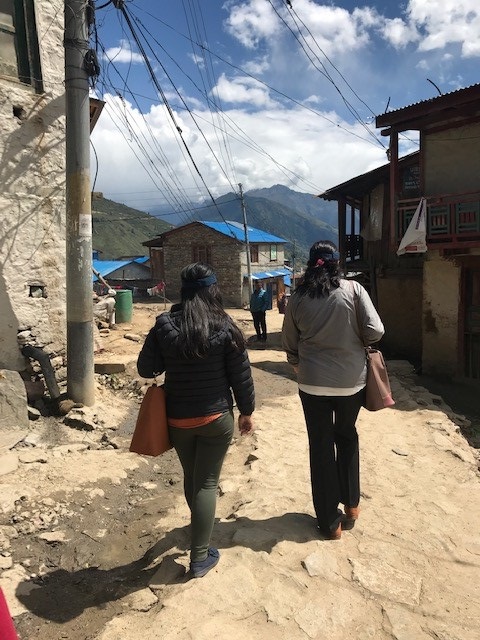
These are the issues that we found.
THE ISSUES
The people are very poor, with little money for food, healthcare or clothes.
There is low awareness, with little access and awareness of family planning.
The mountain people especially, have many children – many up to 7 – for two reasons, one: they want a son, and will keep having babies until they have one. This is a deep-rooted, ancient cultural belief. This has had a serious impact on the number of male and females in the population. As we walked down the main street, it was shocking to see the high number of women compared to men. And secondly, the hope that that they will be looked after in their old age. They say that they expect several of their children to die in accidents, falling off the mountains as the paths are so steep, or due to disease and malnutrition. However, having more children means that there are more mouths to feed, which increases starvation, and parents are less able to care and watch their children.
There is a lack of infrastructure, with the only one road to a remote area of China, no running water, no mains sewage, and poor electricity in the town, and no electricity in the surrounding mountains.
We noted that parents did not behave responsibly and were willing to leave their children at any relatives’ house, not caring if they were given adequate food. Often these children were maltreated and made to work so that they could not attend school.
It is a challenging place to work and live, and the government officials leave and change frequently, every 6-12 months, leading to a desperate lack of continuity, so new plans and changes are almost impossible to bring in.
There are very few quality schools. Parents that want their children to have a good education and rise out of poverty are prepared to send their children away – a plane ride away – to better schools from the age of 6.
Over the years, there have been many, many organisations trying to help the Humla people, however, the ‘local activists for change’ told us that this led to a ‘Dependency Mindset,’ where they do not take responsibility for themselves, but look to organisations to give to them. This is unstainable.
We learned of a small business start-up programme which provided tailoring training for 300 women, giving a training allowance and a sewing machine to each woman. However only one of these women set up in business. Perhaps the reason that no one else did is that the Humla people are from high classes, including Brahmins and …. These classes traditionally feel too superior to do shop work and sell products. This ancient class system could be contributing to the high poverty seen.
There is a mindset that everything inside their world is bad, and everything outside their world is good. Which leads to the people wanting to send their children away.
With the only transport out of the region being aircraft, leaving is very expensive, and once a person or child has left, then they do not expect to come back for many, many years, if ever.
There are very little outside influences, leading to continued ignorance and little change.
The people seem to look short-term, managing immediate problems, such as finding food and water, giving birth, and the days walking into the town to buy food.
Food is flown in by helicopter by the government, and rationed, at a lower market price. Every family receives a ration of salt and rice per year that they can purchase for a lower-than-
market rate.

ORPHANAGE TRAFFICKING
Due to the issues above, we found that many of our children’s parents had taken a loan against their fields and houses, in order to pay a trafficker to take their child and place them in the shelter in
Kathmandu. This is a one-off transaction, and many of the families do not expect to see their child again unless they are very successful and return to find them and support them
in their old age. The trafficker would make a sizeable profit from this transaction, and possibly end up in possession of their land and houses if they do not repay.
When the children are placed in a shelter or ‘orphanage’, the shelters make a profit from foreign donors and visiting paying volunteers. This has been a racket for decades.
NOTE: It is estimated that approx. 85% of children in ‘orphanages’ have at least one parent.
Please don’t give money or volunteer at ‘orphanages’ as this increases the problem.
In the past, many children have been sent away for education in the past, and there are one or two who return as professionals, such as doctors or engineers and support their parents. This creates a dream, a hope for everyone, even the most uneducated and poorest families, and perpetuates the sending of children away with the blind hope of education and fortune, when the reality, as these 7 girls, who endured mistreatment, may be very different.
As we visited the families, we found that if parents were actively involved in their children’s wellbeing, and caring, then the child responded well to being reintegrated. However, if the parents did not accept responsibility, then the child had not thrived over the past few weeks since reintegration and looked unhappy and malnourished.
We were inspired to see that some people had been away from Humla for education and had now returned. The principal of the local private school had returned many years before to establish a school so that the children did not have to leave like he did at such an early age. Children can be emotionally scarred when separated from their parents from an early age, leading to emotional issues throughout their lifetime.
ALTERNATIVE CARE
The UN published Alternative Care guidelines, discussing that it is better for children to be kept safe in their families, rather than placed into institutions. https://www.unicef.org/protection/alternative_care_Guidelines-English.pdf
The financial administrator of the Head Society, which has shelters for the disabled and visually impaired, again had returned to work with her people. We recognise the importance of their work and the sacrifice that they have made to do this, and we honour them.
One Family’s Story
This couple are from a village in the surrounding mountains, three hours fast walk from Simikot town. They were married when they were both 13 years of age. Not using contraception, as is traditional, they started having children immediately. Their first children were girls, so they kept having children until finally after 4 girls, they now have a boy. The mother and father are now 25, and their oldest girl is 12. They are Brahmin, and the father makes occasional money from being a priest at ceremonies, and they have a cow and a field. The eldest girl often looks after the cow and field, collect firewood and cook, and when we met the parents in Simikot, had been left alone in the village to do this. When two of their middle girls were 6 and 7, the father took a loan against his field and house with a trafficker, and sent the girls to Kathmandu to the shelter, hoping they would have education. They never expected to see or hear from them again. When the girls were rescued from the shelter home in Kathmandu by Asha, they were malnourished with sores on their bodies. After being with Asha for many weeks, they looked healthy and happy. When we met them in Simikot, they had been sent to live with relatives in Simikot by their parents, so that they could attend school, as the school in their village is hardly every open, and the next school is 2 hours walk away. As we talked with them, we could see that the girls were malnourished and looking in poorer health than when they had returned. The parents acted irresponsibly, and we counselled them about good parenting, how children need their parents, and how the parents could consider contraception, so they could try and look after the children that they have. We demanded that one of them would be available to care for the children so that they could be safe and well looked after. We discussed small business start-up ideas such as bee-keeping so that the parents could increase their income and provide adequate food for the children.
The big question that we came away with is this.
WHAT CAN WE DO?
As a team, we have decided to continue working with the families of the children that we had temporarily in our care, and follow them up, working with the social workers and women we met on our visit. We will be able to stay in touch through phone and will visit next year to follow-up again. We will look for ways to empower the mothers of the children to be economically independent. We will look at small business ideas, such as incense stick making, animal husbandry, farming and make sure that it is a feasible idea, and that the product can be sold. We are going to investigate the possibility of multivitamin distribution.
HOW CAN YOU HELP?
Please, be in touch. If you know small start-up business ideas that have worked in rural areas, and that are culturally sensitive, then let us know and work with us.
Please, donate: we have set up The Humla Fund, so that we can continue our work caring for these 7 children, and most importantly, to bring about economic empowerment for their families.
We aim to bring a small change, little by little. One precious girl at a time.
